MLB Road Trips & Multi-City Baseball Travel | How to Follow Your Team Across Cities in 2026
MLB road trips are transforming baseball travel in 2026. Discover the best multi-city baseball corridors, divisional swings, and structured MLB road trip packages that turn a weekend into a full baseball journey.

MLB Road Trips & Multi-City Baseball Travel
A single-series trip is a baseball weekend.
A multi-city MLB road trip is a baseball journey.
In 2026, one of the fastest-growing segments of baseball travel isn’t individual home series or one-off stadium visits. It’s structured, multi-stop itineraries that follow a team across consecutive road matchups. Fans are no longer flying in and out for a single night game. They’re planning intentional MLB road trips, aligning travel windows with divisional swings, and building multi-city baseball trips that unfold over five, seven, even eight days.
This shift reflects a broader change in how fans approach MLB travel packages. Instead of viewing the schedule as isolated dates, travelers now see it as a moving corridor. When a team plays Friday through Sunday in one city and Monday through Wednesday in another nearby market, the itinerary practically writes itself. Geography and timing combine to create natural travel routes that allow you to experience two or even three ballparks in one continuous stretch without retracing your steps.
The MLB calendar is uniquely suited for this style of travel. Three-game and four-game sets provide structure. Divisional rivalries increase atmosphere. Downtown stadium locations make city transitions efficient. Short regional flights reduce fatigue. Together, those elements turn what was once a quick weekend into a layered baseball experience.
This is where MLB road trip packages shift from convenient to strategic. Coordinating tickets, hotels, and flights across multiple cities requires foresight. When done correctly, a multi-city baseball trip becomes more than a vacation — it becomes a moving narrative of the season itself, city by city, series by series.
Why Multi-City Baseball Trips Are Growing in 2026
Major League Baseball is uniquely built for road travel.
Unlike one-day sporting events, baseball unfolds across three- and four-game series. That structure gives fans time to settle into a city, explore during the day, and return for consecutive nights at the ballpark.
Several factors are driving the growth of multi-city MLB vacation packages:
• Series are geographically clustered
• Divisional rivals often play back-to-back road stops
• Many stadiums are located downtown
• Flights between regional cities are short
• Weekend series anchor travel timing
When a team plays Friday through Sunday in one city and Monday through Wednesday in another nearby market, the schedule essentially hands you a blueprint.
Instead of returning home between stops, fans are extending their trip and letting the season unfold city by city.
The Strongest MLB Road Trip Corridors in 2026
Not every stretch of the MLB schedule is built for multi-city travel.
The strongest MLB road trips in 2026 happen when geography, rivalry intensity, and timing intersect. When consecutive series are clustered within short flight corridors or drivable distances, the schedule transforms from a list of dates into a structured travel blueprint.
The most compelling multi-city baseball routes share common traits:
• Stadiums located in walkable downtown districts
• Cities connected by sub-three-hour flights or efficient train lines
• Divisional matchups that elevate atmosphere
• Weather windows that support extended stays
• Distinct ballpark architecture that creates contrast between stops
When those variables align, fans can realistically attend two or even three series in one continuous itinerary without fatigue. Instead of retracing steps or backtracking across time zones, you move forward through the season, city by city.
The following baseball corridors consistently produce the most efficient and visually diverse multi-city MLB road trips, giving fans the opportunity to experience different stadium environments, neighborhood rhythms, and rivalry dynamics within a single structured journey.
Below are the most compelling MLB road trip corridors fans can realistically plan in 2026.

East Coast Historic Ballpark Run
The Northeast corridor is one of the cleanest multi-city MLB road trip regions in the league. Flights are short. Amtrak provides efficient city-to-city transfers. Time zones don’t change. Stadiums sit inside dense, walkable urban cores.
This isn’t just convenient. It’s structurally ideal for multi-city baseball travel.
Because series often align geographically, fans can realistically build a 6–8 day MLB East Coast road trip that includes two or even three iconic ballparks without travel fatigue.
Cities commonly paired:
New York
Boston
Philadelphia
Baltimore
Washington
A Realistic 7-Day East Coast Baseball Itinerary
Here’s how a structured multi-city baseball trip can unfold in 2026:
Days 1–2: New York City
Arrive in Manhattan and settle into a centrally located hotel near Midtown or Lower Manhattan. Spend the afternoon exploring the city before taking the subway directly to Yankee Stadium in the Bronx for Game One.
Day two includes a second Yankees matchup, especially powerful if it’s a divisional series against Boston or Toronto. The contrast between Manhattan’s skyline energy and the scale of Yankee Stadium creates an unmistakable baseball atmosphere.
Day 3: Train to Boston
Take a morning Amtrak from New York to Boston. The ride is smooth, under four hours, and eliminates airport friction. Check into a hotel near Back Bay or Kenmore Square.
Spend the evening at Fenway Park, where the Green Monster and tight seating bowl create a completely different environment than the Bronx. The intimacy and crowd proximity at Fenway feels historic and layered.
Days 4–5: Philadelphia or Washington
From Boston, fly or train to Philadelphia or Washington depending on the schedule alignment.
In Philadelphia, Citizens Bank Park delivers intensity, particularly during NL East matchups. Stay downtown and use quick transit to access the stadium.
In Washington, Nationals Park offers waterfront views and Capitol skyline framing. Navy Yard hotels allow easy walkability before and after the game.
This second stop adds architectural contrast:
• Fenway’s historic intimacy
• Yankee Stadium’s scale and tradition
• Citizens Bank Park’s edge
• Nationals Park’s modern waterfront integration
Optional Extension: Baltimore
For travelers with an eighth day, adding Oriole Park at Camden Yards is one of the easiest extensions in the league. Baltimore sits under an hour by train from Washington and adds one of baseball’s most important architectural landmarks.
Few ballparks changed the sport like Camden Yards did. Seeing it in person during a multi-city baseball trip adds real historical weight.
Why This Corridor Works So Well
The East Coast corridor functions because it removes friction.
• Cities are compact and walkable
• Hotels sit near downtown cores
• Public transit reduces rideshare dependency
• Time zone stability prevents fatigue
• Flights rarely exceed one hour
You aren’t crossing regions. You’re moving through a baseball corridor.
For fans planning MLB travel packages in 2026, this corridor delivers density without exhaustion.
Midwest Ballpark Loop
If the East Coast corridor is about historic density, the Midwest Ballpark Loop is about efficiency and authenticity.
No region in Major League Baseball offers more compact rivalry geography than the Midwest. Flights are short. Many routes are drivable. Time zones remain stable. Stadiums are primarily located in walkable downtown cores.
For fans looking to structure a multi-city MLB road trip without coastal pricing volatility or long-haul flights, the Midwest remains one of the strongest baseball travel corridors in 2026.
Cities commonly linked:
Chicago
St. Louis
Milwaukee
Cincinnati
Cleveland
Detroit
Pittsburgh
A Realistic 7-Day Midwest Baseball Itinerary
Here’s how a structured Midwest MLB road trip can unfold when divisional schedules align.
Days 1–2: Chicago
Begin in Chicago, one of the most versatile baseball cities in the country.
If the schedule lines up, you can structure:
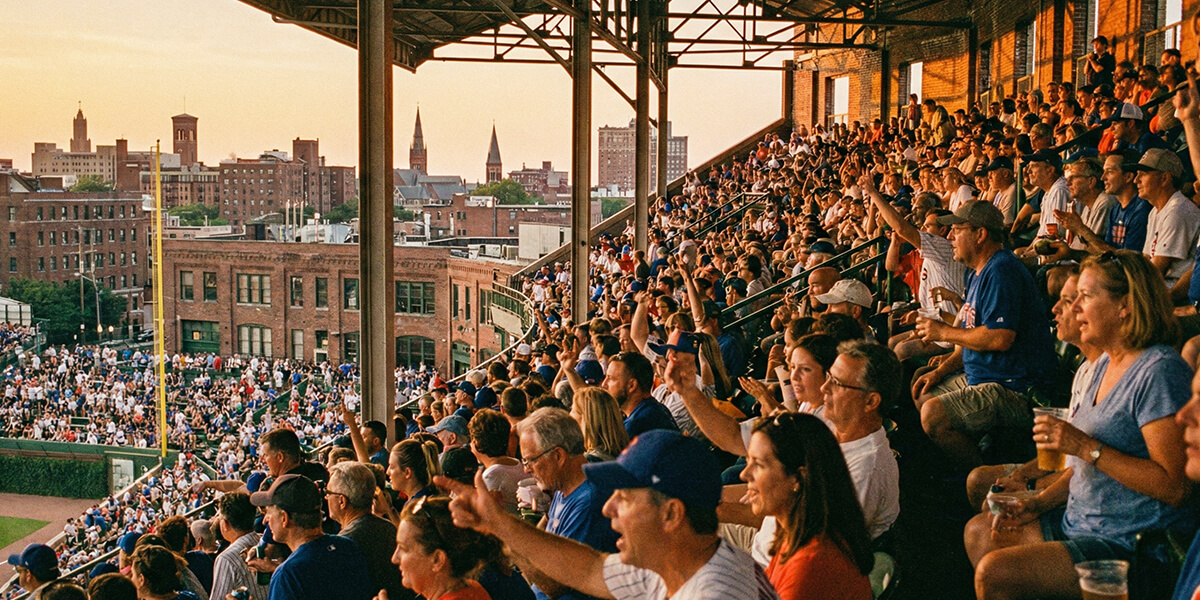
• A Cubs home game at Wrigley Field
• A White Sox game at Guaranteed Rate Field
Few MLB road trips allow you to experience two franchises in one city with such distinct identities.
Wrigley Field blends ivy walls and Wrigleyville walkability. Guaranteed Rate Field offers a sharper, South Side energy. Even if you attend only one series, Chicago’s density makes it the ideal launch point.
Stay in River North, the Loop, or near Wrigleyville depending on your priorities.
Day 3: Travel to Milwaukee or St. Louis
From Chicago:
• Milwaukee is under 90 minutes by train or car
• St. Louis is a short flight or manageable drive
If the Brewers are hosting a divisional series at American Family Field, you get a retractable-roof environment with a strong tailgate culture.
If the Cardinals are home at Busch Stadium, you step into one of the most tradition-rich stadium settings in the league with the Gateway Arch rising beyond the outfield.
Both options preserve the rhythm of the trip without travel fatigue.
Days 4–5: Cincinnati or Pittsburgh
From St. Louis or Milwaukee, the corridor continues naturally east.
Great American Ball Park in Cincinnati offers riverfront integration and one of the cleanest downtown stadium placements in baseball. Hotels sit within walking distance, and the Ohio River backdrop gives evening games a strong visual identity.
PNC Park in Pittsburgh delivers perhaps the most scenic skyline framing in Major League Baseball. Walking across the Roberto Clemente Bridge into the stadium district adds ceremony to game day.
The visual contrast between Busch Stadium’s Arch backdrop, Cincinnati’s riverfront, and Pittsburgh’s skyline is striking within a short travel window.
Optional Extension: Cleveland or Detroit
For travelers with a full 8–9 day window, Cleveland and Detroit extend the loop without breaking efficiency.
Progressive Field anchors Cleveland’s Gateway District, surrounded by hotels and restaurants within steps of the ballpark.
Comerica Park in Detroit offers skyline framing and a revitalized downtown district that pairs well with summer baseball.
Because flight times between these Midwest cities are short and often under two hours, adding a fourth stop is realistic without exhaustion.
Why the Midwest Corridor Works So Well
The Midwest Ballpark Loop succeeds because of three factors:
1. Divisional Proximity
NL Central and AL Central teams frequently cluster road series geographically.
A Cubs road swing might move from Cincinnati to Pittsburgh.
A Cardinals stretch could move from Chicago to Milwaukee.
A Tigers series could align with Cleveland.
The MLB schedule often creates natural two-city pairings.
2. Downtown Stadium Integration
Unlike suburban venues in other regions, most Midwest ballparks sit directly in city cores:
• Wrigley Field embedded in Wrigleyville
• Busch Stadium integrated with Ballpark Village
• PNC Park connected via bridge walk
• Great American Ball Park on the riverfront
• Progressive Field in Gateway District
This reduces reliance on rental cars and minimizes logistics between hotel and stadium.
3. Travel Efficiency Without Time Zone Fatigue
You remain in the Central or Eastern time zone.
Flights are short.
Driving corridors are manageable.
This makes the Midwest one of the least fatiguing multi-city MLB road trip regions in the league.

California Divisional Swing
California is one of the few places where an MLB road trip can feel like four distinct destinations without leaving one state. The stadium environments change dramatically by region, and the travel logistics shift with them. Los Angeles is sprawling and destination-layered. Anaheim is structured and family-friendly with built-in attractions. San Diego is downtown-coastal and walkable. San Francisco is dense, waterfront, and compact.
That contrast is exactly why a California MLB road trip is one of the most compelling multi-city baseball trips in 2026. Flights are short, weather is reliable, and divisional schedules often create natural back-to-back series windows that allow fans to follow a team up or down the coast without retracing steps.
This corridor blends baseball and destination travel in equal measure.
Cities commonly paired:
Los Angeles
Anaheim
San Diego
San Francisco
A Realistic 7-Day California MLB Road Trip
When divisional schedules align, this is how a West Coast baseball journey can unfold.
Days 1–2: Los Angeles
Start in Los Angeles.
Depending on the schedule, you can structure:
• A Dodgers home series at Dodger Stadium
• Or an Angels series at Angel Stadium in Anaheim
Dodger Stadium sits above Chavez Ravine, offering hillside scale and pastel sunset skies that feel distinct from downtown parks. The size of the stadium and postseason expectations create an atmosphere that carries weight even early in the season.
Angel Stadium offers a more traditional, Southern California setting, with flexibility to pair baseball with coastal drives or beach communities.
Because Los Angeles is geographically spread out, selecting the right hotel location is critical. Many travelers stay centrally and use rideshare strategically for game nights.
Day 3: Travel to San Diego
A short one-hour flight or scenic drive brings you to San Diego.
This is where the tone shifts.
Petco Park sits directly in the Gaslamp Quarter, surrounded by restaurants, rooftop venues, and waterfront access. Unlike Dodger Stadium’s hillside setting, Petco integrates seamlessly with its downtown district.
Afternoons can include coastal exploration in La Jolla or Coronado before returning to the Gaslamp for first pitch. The walkability transforms game day into a continuous urban experience.
Divisional series between the Dodgers and Padres amplify crowd energy and often produce playoff-like intensity even in midseason.
Days 4–5: San Francisco
From San Diego, a short flight north transitions the trip into a completely different environment.
Oracle Park sits directly on San Francisco Bay. McCovey Cove, downtown skyline framing, and crisp evening air create one of the most visually distinct stadium experiences in Major League Baseball.
Unlike Los Angeles sprawl or San Diego coastal warmth, San Francisco offers compact density. Hotels in SoMa or Union Square allow walkable access to the ballpark.
Seeing three California stadiums in one week highlights how dramatically MLB architecture can differ within the same state:
• Dodger Stadium’s scale and elevation
• Petco Park’s downtown coastal integration
• Oracle Park’s waterfront skyline framing
Why the California Corridor Works So Well
The California Divisional Swing succeeds because of:
1. Climate Stability
From April through September, Southern California offers consistent weather conditions. Even San Francisco’s cooler evenings remain predictable during summer months.
This stability reduces risk when planning MLB travel packages months in advance.
2. Short Intercity Flights
Los Angeles to San Diego: ~1 hour by air
San Diego to San Francisco: ~1.5 hours
Los Angeles to San Francisco: ~1 hour
Travel time is minimal relative to the diversity of environments experienced.
3. Divisional Rivalry Intensity
Dodgers vs Padres
Dodgers vs Giants
Padres vs Giants
These matchups frequently align in schedule clusters. When back-to-back series occur, fans can follow their team north or south through California without retracing their route.
Because these are premium markets with strong attendance, rivalry weekends often compress hotel availability quickly. Structured MLB road trip packages protect both seat inventory and hotel proximity during peak summer windows.
👉 Plan a California MLB road trip with Elite Sports Tours
Texas Two-City Swing
When schedules align, Houston and Arlington create one of the cleanest and most climate-reliable two-city MLB road trips in the country. Unlike coastal corridors driven by scenery or historic intimacy, the Texas swing is built around modern stadium infrastructure, divisional intensity, and predictable game conditions.
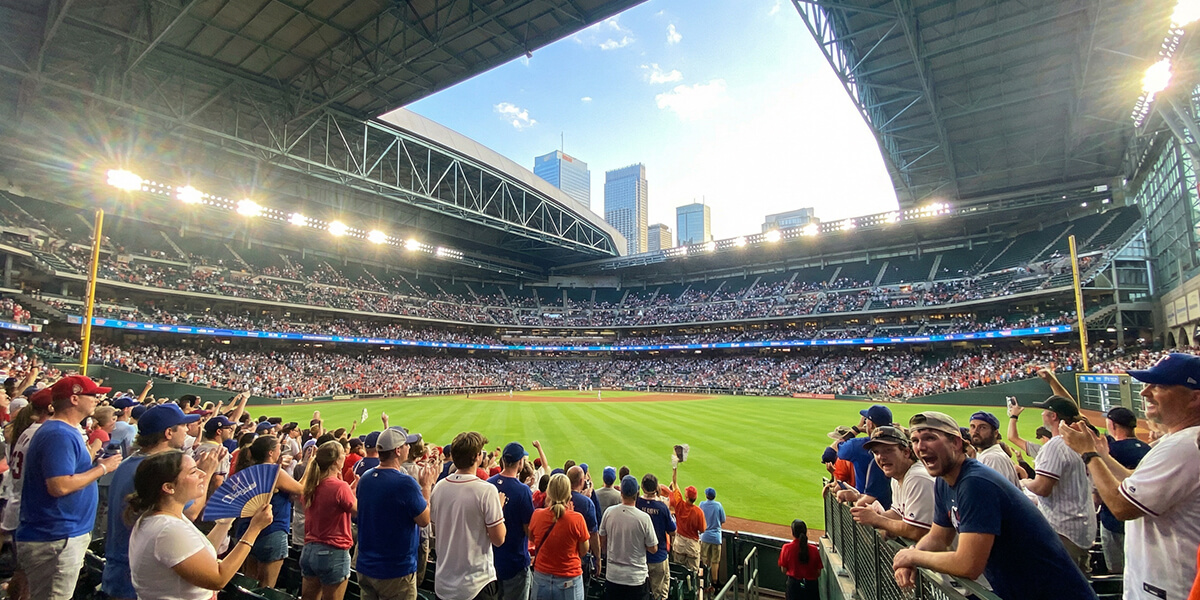
Both ballparks — Minute Maid Park in Houston and Globe Life Field in Arlington — feature retractable roofs. In a state where summer heat can dominate the travel experience, that design feature fundamentally changes planning strategy. You can confidently structure a multi-city baseball trip in July or August without worrying about weather volatility.
For fans prioritizing competitive matchups, warm-weather reliability, and manageable travel windows, the Texas Two-City Swing remains one of the strongest MLB road trip options in 2026.
Cities paired:
Houston
Arlington (Dallas–Fort Worth Metroplex)
A Realistic 6–7 Day Texas MLB Road Trip
Days 1–3: Houston
Begin in Houston for a series at Minute Maid Park, located directly in downtown. The skyline backdrop and proximity to restaurant districts make game day easy to structure. Visitors can stay in downtown Houston and walk to the ballpark, eliminating transportation friction.
Houston’s home atmosphere tends to feel focused and competitive, particularly during AL West divisional matchups. Late-season games often carry postseason implications, amplifying crowd engagement.
Daytime exploration options include:
- Museum District
- Houston’s culinary scene
- Rooftop dining with skyline views
Because the roof can close during extreme heat, fans get predictable comfort regardless of season.
Day 4: Travel to Arlington (Dallas–Fort Worth)
A short one-hour flight or a manageable drive connects Houston to the Dallas–Fort Worth metroplex.
The transition is clean. No time zone changes. Minimal travel fatigue.
Days 5–6: Arlington
Globe Life Field in Arlington offers one of the most climate-controlled environments in Major League Baseball. The retractable roof ensures consistent playing conditions, which makes summer divisional matchups viable travel windows.
Unlike Houston’s downtown integration, Arlington sits within a broader entertainment district between Dallas and Fort Worth. Hotel strategy becomes important here. Many travelers stay in:
- Arlington entertainment district
- Downtown Dallas
- Fort Worth’s Sundance Square
The stadium environment feels modern and expansive, with wide concourses and strong sightlines. Divisional series against Houston often intensify the atmosphere, especially during playoff races.
Why This Corridor Works
1. Climate Reliability
Texas summers can be extreme, but both stadiums eliminate uncertainty. This makes the Texas swing one of the safest mid-summer MLB road trip options in the country.
2. Divisional Rivalry Alignment
The Astros and Rangers share an AL West rivalry that often produces schedule clusters. When back-to-back series occur, fans can realistically follow their team through both cities in one structured trip.
3. Travel Efficiency
- Flights under 90 minutes
- No time zone shifts
- Large airport networks (IAH, HOU, DFW, DAL)
- Minimal travel fatigue
Compared to West Coast multi-city trips, this corridor is compact and controlled.
👉 Plan your Texas MLB road trip and connect Houston and Arlington with climate-controlled, divisional baseball travel in 2026.

Desert & Mountain Connector
If the California swing is cinematic and the Midwest loop is traditional, the Desert & Mountain Connector is about contrast.
Few MLB road trips allow you to experience two radically different baseball environments within days of each other. In Phoenix, you get climate-controlled reliability inside Chase Field. In Denver, you step into open-air altitude baseball at Coors Field, framed by the Rocky Mountains.
This corridor is less about rivalry intensity and more about environmental diversity. It appeals to fans who want to feel the physical difference between stadium atmospheres — from controlled desert comfort to high-elevation offensive fireworks.
When schedules align, this becomes one of the most unique multi-city MLB road trips in 2026.
Cities paired:
Phoenix
Denver
A Realistic 6–7 Day Desert to Mountain Itinerary
Days 1–3: Phoenix
Begin in downtown Phoenix for a series at Chase Field. The retractable roof ensures consistent game conditions even during peak desert heat, making Arizona one of the most predictable summer baseball destinations in the league.
Chase Field’s downtown location allows visitors to stay within walking distance of the stadium. Hotels cluster near restaurants and nightlife districts, simplifying game-day logistics.
During the day, travelers can layer in:
- Scottsdale dining and resort districts
- Desert hiking excursions
- Golf outings
- Rooftop dining with skyline views
Because Phoenix heat can peak in the afternoon, structuring baseball evenings inside a climate-controlled venue creates a comfortable rhythm.
Day 4: Travel to Denver
A short two-hour flight connects Phoenix to Denver.
Unlike other corridors that maintain similar conditions between cities, this transition is dramatic. Elevation jumps from desert heat to mile-high air.
Days 5–6: Denver
Coors Field sits directly in Denver’s LoDo district, surrounded by walkable restaurants and breweries. Unlike Phoenix, there is no roof protection here — and that’s part of the appeal.
The altitude changes the game itself. Balls travel differently. Offense often feels amplified. Evening games frequently produce dramatic scoring swings.
Denver’s summer evenings offer:
- Low humidity
- Comfortable temperatures
- Mountain skyline visibility
- Long daylight windows
Staying in LoDo or downtown Denver allows fans to walk to the stadium, preserving the clean itinerary structure.
Why This Corridor Works
1. Climate Strategy
Phoenix provides weather certainty. Denver provides open-air mountain comfort.
For travelers booking MLB road trip packages in July or August, starting in Arizona and finishing in Colorado creates a controlled-to-open transition rather than the reverse.
2. Environmental Contrast
Within one week, fans experience:
• Climate-controlled desert baseball
• High-altitude open-air baseball
• Dry heat vs crisp mountain evenings
• Two distinct downtown stadium integrations
Few MLB travel corridors offer that level of environmental variation without crossing half the country.
3. Manageable Travel Window
Phoenix and Denver are separated by:
- ~2-hour flight
- No time zone shift
- Minimal travel fatigue
This makes the Desert & Mountain Connector one of the cleanest western multi-city MLB travel routes.
👉 Build your Desert & Mountain MLB road trip and connect Phoenix and Denver in one altitude-shifting baseball itinerary for 2026.

How to Structure the Perfect MLB Road Trip
Planning a multi-city MLB road trip is different from booking a single baseball weekend. The complexity increases with every additional city, every additional game, and every additional flight window.
The strongest MLB road trips in 2026 aren’t just about geography. They’re about pacing.
When structured correctly, a 7-day baseball trip feels immersive. When structured poorly, it feels rushed and exhausting.
Here’s how experienced baseball travelers build itineraries that maintain rhythm without fatigue.
Step 1: Align the Schedule First
The MLB calendar determines everything.
Look for:
• Consecutive road series in nearby cities
• Divisional matchups that elevate atmosphere
• Friday–Sunday + Monday–Wednesday pairings
• Short intercity flight corridors
When the schedule aligns geographically, your itinerary becomes fluid instead of forced.
This is the foundation of successful MLB road trip packages.
Step 2: Prioritize Two Games Per City
The mistake many travelers make is trying to attend three games in each stop.
The optimal structure is:
• Two games in City One
• Travel day
• Two games in City Two
This preserves baseball immersion while protecting your energy for exploration.
Two-game exposure gives you:
- One standard game-night experience
- One chance to explore a different seating view
- Flexibility if weather or schedule shifts occur
It also leaves time for city exploration during the day.
Step 3: Stay Walkable Whenever Possible
The most successful multi-city baseball trips minimize transportation friction.
Prioritize:
• Downtown hotels near the stadium
• Neighborhoods connected by public transit
• Cities where you can walk to dinner and the ballpark
The difference between walking 10 minutes to a stadium and sitting in traffic for 45 minutes dramatically affects your overall travel rhythm.
This is especially important in:
- Chicago
- Boston
- San Diego
- San Francisco
- Pittsburgh
- Washington
Walkability transforms game day into an experience rather than a commute.
Step 4: Avoid Morning Flights After Night Games
Baseball is played at night.
A 10:00 pm final out followed by a 6:00 am airport departure is one of the fastest ways to break trip momentum.
Instead:
• Travel mid-morning or early afternoon
• Allow time for coffee and recovery
• Keep travel days light
This preserves the immersive quality of the trip.
Step 5: Plan Around Atmosphere, Not Just Opponent
Not every series carries the same energy.
If you’re building a multi-city MLB vacation, consider:
• Divisional rivalry games
• Late-season playoff races
• Holiday weekend series
• Interleague matchups with regional history
Atmosphere compounds across cities. A strong rivalry in one stop sets tone for the next.
Step 6: Build Flexibility Into the Itinerary
Multi-city baseball travel compounds logistics:
• Multiple sets of tickets
• Two hotels
• Two arrival windows
• Potential weather shifts
• Flight timing alignment
Structured MLB travel packages simplify this by coordinating seat inventory, hotel proximity, and travel timing together.
When done correctly, your focus shifts from logistics to the experience itself.
The 7-Day MLB Road Trip Blueprint
A proven structure:
Day 1: Arrival, explore city
Day 2: Game 1
Day 3: Game 2
Day 4: Travel to next city
Day 5: Game 3
Day 6: Game 4
Day 7: Departure
This blueprint works for:
• East Coast MLB road trips
• Midwest ballpark loops
• California divisional swings
• Texas two-city series
• Desert & Mountain connectors
It maximizes immersion while maintaining balance.
When Multi-City MLB Travel Makes the Most Sense
The best time to plan a multi-city baseball trip is when:
• Your team has consecutive road series nearby
• Two destination-worthy cities align
• Hotel compression risk exists for rivalry weekends
• Flights between cities are under three hours
• You want to experience multiple stadium environments in one season
This is where baseball shifts from event travel to experiential travel.