Best Seats and Ticket Options at New York Giants Games
A section-by-section guide to picking the right New York Giants tickets at MetLife Stadium. Covers lower sideline 137-140, Mezzanine Club at 212-215, the EY Coaches Club, the upper west sideline with the Manhattan skyline view, and the contrarian single-ticket play in the upper sideline corner. Also covers timing the buy by opponent tier and how the New York football market actually moves through the season.
Best Seats and Ticket Options at New York Giants Games
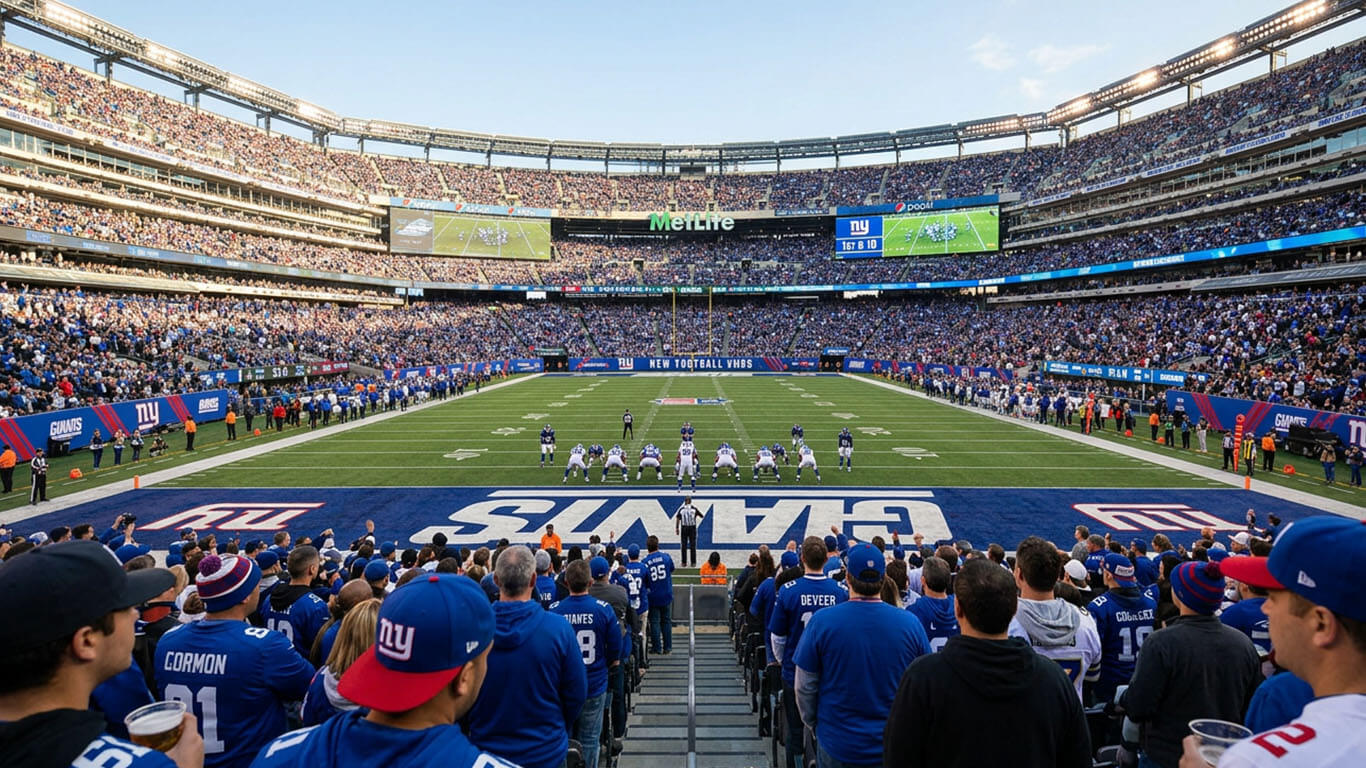
After nearly two decades of planning trips to MetLife Stadium, one consistent takeaway is that the section selected for a New York Giants game shapes the day more than almost any other decision. The 82,500-seat venue in East Rutherford operates as a three-deck, open-air stadium shared by two NFL teams, with pricing that shifts significantly based on opponent strength and weather conditions. A November matchup against the Cowboys and a late-September non-divisional game in the same section can feel like completely different experiences. New York Giants Tickets reward buyers who approach the seat map as a decision tree rather than a simple price ladder, weighing factors such as viewing angle, sun exposure, wind across the Meadowlands, and overall crowd environment. The highest-priced option is not always the most effective choice, and travelers who chase premium pricing often end up with a viewing angle they would not have selected based on experience alone.
Most guides to New York Giants tickets stop at surface-level advice, focusing on proximity and price without addressing how the building actually performs. At this stadium, section quality varies more than the seating chart suggests. The east sideline absorbs more direct sun during early kickoffs, while the west sideline offers more consistent shade, and the 200-level Mezzanine Club provides one of the few protected environments outside of suite-level seating. Pricing compresses during high-demand matchups and expands again for lower-profile games, which means the optimal section changes depending on the week. Some premium areas underperform relative to their cost, while select standard sections consistently deliver stronger football views. This guide breaks down the stadium section by section, outlining recommended row ranges, tradeoffs, and how each tier performs under real conditions.
The recommendations throughout this guide are built on long-term planning experience and direct traveler feedback across multiple seasons of New York Giants games. Sections identified as value plays are based on consistent post-game feedback from travelers seated in those areas, while sections that underdeliver are noted accordingly. Coverage includes the lower bowl, EY Coaches Club, Mezzanine Club, upper deck, and suite inventory, all aligned with the current stadium configuration. By the end, travelers will understand which seating options best fit their trip, which to avoid, and how to time the purchase to maximize overall value.
Best Seats at New York Giants Games: A Section-by-Section Breakdown
The breakdown below moves from the field up. Each section names the row range that matters, what you actually see from those seats, and who should pick the section over the alternatives. Treat the price language as relative within MetLife Stadium rather than an absolute dollar figure, because the New York Giants tickets market shifts week to week with opponent, weather, and how the season is breaking. Where two sections look similar on the chart but behave differently in person, the notes flag it. Suites and the most exclusive clubs get a brief mention rather than a deep dive because they sit on a separate New York Giants tickets curve with their own logic and their own travel packages math. Read the strategy section after the breakdown rather than skipping straight to a section pick, because timing and section interact more than most buyers realize.
Lower Sideline (Sections 109-117 East, 134-143 West)
Lower sideline at MetLife Stadium is the closest non-premium tier you can sit in for a New York Giants game, and the rows between 15 and 30 deliver the cleanest read on the offensive line and the secondary. From there you can see which side a screen is rolling to before the quarterback throws, watch a safety drift on a play action fake, and track receivers through the route concept rather than guessing at the end of it. The west sideline (134-143) is the more comfortable side because the afternoon sun does not hit it during a 1:00 kickoff, and section 139 at the 50-yard line is the single best lower bowl seat in the building that does not carry a club price. I send our travelers to that range first when they ask where to spend up. Rows 1 through 10 sit too close for the broader play geometry to read well, so push toward row 15 unless you specifically want player proximity. Lower west sideline tickets in this range hold their value across opponent tiers, which is part of why they keep showing up in our most-booked New York Giants tickets manifest.
The trade-off is price. Lower sideline at the 40-to-50 carries the second-highest price tag in the building behind the field-level Coaches Club, and the gap between sideline and corner is sharper at MetLife Stadium than at most NFL venues. If you can flex into sections 109 through 113 on the east or 142 through 143 on the west, you save real money for a viewing angle that still reads the football, with a slightly compressed perspective on plays running away from you. Pick lower sideline tickets when the matchup matters and you want to see the actual coaching decisions rather than a wide-angle stadium shot. Skip these seats if you came for atmosphere over the X's and O's, because the upper deck delivers more raw crowd energy for a fraction of the cost. Travelers who bundle hotels with their New York Giants tickets through travel packages often find lower sideline pricing softens slightly when packaged, because lower bowl inventory moves slower than the upper bowl on tier-three and tier-four weeks.
Lower End Zone and Lower Corner (Sections 101-108, 144-150)
From rows 8 through 22 of the lower end zone, you can watch a fade route develop from the receiver's perspective, see exactly when a corner closes the gap on a comeback, and feel the leverage on a goal-line hand-off in a way the sideline cannot show you. Sections 101 through 108 sit behind the south end zone and 144 through 150 sit behind the north end, both with sightlines that get genuinely cinematic when the New York Giants offense is driving toward your end of the field. The catch is that half the action runs the other way. When the offense is at the far end, you are watching through a long perspective that compresses depth and loses the screens and intermediate routes. The corner sections in the 105 to 108 and 144 to 147 ranges split the difference, giving you a partial sideline angle plus an end zone perspective without paying the midfield premium. These New York Giants tickets carry a meaningful price advantage that makes them attractive when the matchup itself is the headline rather than the section.
This is the lower bowl tier I recommend most often to first-time travelers who want to be close to the field without spending mid-sideline money. Pricing softens noticeably below the 110-to-140 range, and on a regular-season Sunday against a non-marquee opponent the corner sections drop into the same band as good seats at smaller NFL venues. Skip lower end zone tickets if you are coming for a marquee opponent like Philadelphia, Dallas, or a prime-time night game, because lower bowl pricing compresses on those weeks and the Mezzanine sideline becomes the smarter spend for the same money. Pick these seats for a Week 4 Sunday against a less-pursued NFC opponent when getting close to the field matters more than being at midfield. Families with kids who want to see the action up close also do well here because the angle is forgiving and the cost lets you buy four or six seats together without re-engineering the budget.
EY Coaches Club (Sections 111C-115C)
The EY Coaches Club is the field-level premium product at MetLife Stadium, occupying sections 111C through 115C on the east sideline directly behind the New York Giants bench. Tickets holders enter through a dedicated VIP gate, sit in padded seats with extra legroom, and receive all-inclusive food in a climate-controlled lounge along with access to a private on-field deck behind the bench where players walk out of the tunnel. From rows 1 through 15 the angle is genuinely low to the field, which sounds appealing and partially is, but it also flattens your read on the secondary and on anything happening on the far sideline. Pricing for the Coaches Club typically clears the $500-to-$1,000 per-seat range and climbs higher on big New York Giants weeks like Eagles or Cowboys home games. This is the New York Giants tickets category I would buy if the trip is a celebration first and a football clinic second.
My honest read is that the Coaches Club is a hospitality product first and a viewing position second. If reading the football matters more to you than being inside the most exclusive room in the building, the Mezzanine Club at one-third the price gives you a better angle on the actual action. The Coaches Club also catches the same afternoon sun problem as the rest of the east sideline during 1:00 kickoffs, which the marketing materials almost never mention. Pick this section if you are taking clients, celebrating an anniversary, or specifically want the close-to-the-bench moment of seeing the team come out of the tunnel before kickoff. Skip these seats if your priority is seeing the geometry of an offensive play unfold across the full width of the field. For corporate New York travel packages, however, the Coaches Club is often the right call because the on-field deck and lounge access raise the trip beyond what standard tickets deliver.
Mezzanine Club Sideline (Sections 207C-220C, 232C-245C)
If money matters and weather protection matters more, the Mezzanine Club sideline is the most underrated New York Giants tickets buy in the building, and I will defend that take on any weekend. These sections sit on the second deck along both sidelines, with the East side accessing the Corona Beach Club through Section 208 and the West side accessing the Toyota Club through Section 244. Both clubs are large indoor lounges with full bars, plated concessions, restrooms, and televisions, and they are the only non-suite tier with weather protection thanks to the upper-deck overhang above. Sightlines from rows 5 through 15 in sections 212 through 215 on the home side are the best mix of angle, comfort, and amenity at the venue for the price you pay. New York Giants tickets here read the entire field without the lower bowl's compression problem, which is why these seats consistently outperform their reputation among travelers who try them once.
Pricing for the Mezzanine Club typically lands at a fraction of the Coaches Club number and frequently sits below the lower sideline on non-premium opponents. The Mezzanine Club is the New York Giants tickets bracket I personally book when I am bringing travelers who care about both the football and staying dry through a December game. The trade-off is you are not as close to the field as the lower bowl, so if proximity is what brought you to the trip, skip these seats. Pick the Mezzanine Club for cold-weather Sundays, for multi-generational groups that need an indoor refuge, and for any value-conscious buyer who wants legitimate premium amenities without paying the field-level premium. This is also the tier that bundles best inside Giants travel packages because the price-to-amenity ratio holds up across opponent tiers, which is rarely true for a club product anywhere in the league.
Upper Deck Sideline (Sections 309-317, 334-343)
If you are trying to spend $80 instead of $300, the upper deck sideline is where the math works for New York Giants tickets, and you give up less than the price gap implies. The 300-level sidelines sit between the 20-yard lines on both sides of the venue, with the west upper sideline (334-343) offering the Manhattan skyline view that is one of the better visual backdrops in the NFL during a 4:25 or prime-time home game. The viewing angle from rows 1 through 15 reads as high but functional because the upper deck is steep, so you can still follow play geometry across the full field. What you lose is detail on individual matchups and any sense of player size, especially at the far end zone. For first-time travelers building their first New York Giants tickets purchase on a budget, this is the entry-point category I recommend before any other in the upper bowl manifest.
The honest trade-off is exposure to the elements. The MetLife Stadium upper deck has no overhang and no roof, which means rain, wind, and December cold all hit you directly with no buffer. For September and October New York Giants home games this is a non-issue, and the upper sideline delivers the best price-to-view ratio in the building. For January and late-December dates the conversation changes, and the Mezzanine Club becomes the smarter spend by a wide margin. Pick the upper deck sideline for early-season matchups, for travelers on a budget, and for groups where being together matters more than being close. Skip these seats for cold-weather playoff-implication games where comfort starts to dominate the value math, and steer clear when building Giants travel packages around a December or January matchup where the open-air exposure works against you.
Upper Deck End Zone and Corners (Sections 301-307, 320-333, 346-350)
Most guides overrate the upper end zone at MetLife Stadium because the chart paints it as a uniform tier, and in person it is anything but uniform. The upper corners in the 305 through 307 and 346 through 350 ranges hold a stronger value position than most travelers realize, retaining a partial sideline angle while sitting at the lowest standard price point on the New York Giants tickets manifest. The pure end zone sections, 301 through 304 and 320 through 327, are where the angle gets genuinely tough. From up there a deep ball fired toward the opposite end zone collapses to a dot and play action becomes hard to follow when the offense is working at the far end. The 320 through 333 range on the south end can also catch wind off the Meadowlands in November and December in a way the chart will never show you.
The argument for these sections is the price. They are the cheapest New York Giants tickets in the standard manifest, often clearing under $60 on a non-marquee Sunday, and the difference between an upper corner and an upper end zone seat is small on the chart but meaningful in person. If your goal is just to be in the building for a NFL Sunday with friends, the corner inventory is a real value play and one of the cleanest budget plays in the league. If you actually want to follow the football with detail, the upper sideline at $20 to $40 more is almost always the right move. The upper end zone is where I send travelers who want the home atmosphere on a tight budget and are not bothered by limited visibility on far-side action, particularly groups of four or more where sitting together matters more than the absolute view.
Suites and Premium Hospitality at MetLife Stadium
Suite inventory at MetLife Stadium runs from the Five Star suites just above the 200-level Mezzanine to the Commissioners Club suites located on the lower club concourse along the 50-yard line. The Commissioners Club is the most prestigious suite product in the building and the only one that combines a 50-yard-line position with field-level club access, while the standard Mezzanine-level luxury suites give you a panoramic open-air vantage with private indoor space behind the seating. Pricing for New York Giants suites typically runs $5,000 to over $30,000 per game depending on opponent, suite tier, and whether food and beverage are included in the package. These are group purchases by definition, with most New York Giants suites holding 12 to 30 guests, all-inclusive catering, dedicated suite attendants, and VIP parking included for a portion of the seating. For corporate travel and milestone-trip groups, the suite path is the only New York Giants tickets category that delivers a true private-room experience inside the building.
New York Giants Tickets Strategy: When and How to Buy
Pricing for New York Giants tickets splits into roughly four tiers across an NFL season, and reading the tier correctly drives every smart purchase. Tier one is divisional rivalry weeks, particularly Eagles, Cowboys, and Commanders home games, where lower bowl pricing can run two to three times the season average and the upper bowl still trades at a premium. Tier two is prime-time and marquee non-divisional games, including Sunday Night Football and matchups against teams like the Chiefs or 49ers, where pricing sits well above the season mean but below rivalry levels. Tier three is mid-season Sundays against decent non-rivals, where the NFL market behaves close to fair value and travelers can usually find a comfortable seat at a comfortable price. Tier four is early-season non-marquee weeks and late-season games where playoff implications have faded, and on those weeks New York Giants tickets across most sections drop sharply.
My timing rule is to lock in tier-one and tier-two New York Giants tickets early and let tier-three and tier-four matchups breathe on the secondary market. Rivalry inventory in the lower bowl and the Mezzanine Club climbs steadily from schedule release through August and again in the final two weeks before kickoff as travelers commit to the trip, so waiting on those weeks rarely pays. For tier-three and tier-four games, the secondary market typically softens in the final 72 hours before kickoff, particularly in the upper bowl, and a patient buyer can save 30 to 40 percent on the same seat they could have bought four weeks out. The exception is the playoff push: any late-season game with seeding implications behaves like a tier-one matchup regardless of opponent and prices accordingly. Travel packages that bundle New York Giants tickets with hotels lock in faster than standalone tickets, so they should be pursued earlier on the calendar.
Opponent matters more than week number on most NFL Sundays. A Wednesday-buy lower sideline ticket for a Week 12 Cowboys home game will cost more than the same section for a Week 1 game against a less-pursued opponent, even though Week 1 historically prices higher across the league. The other variable that catches travelers off guard is concert and event proximity at the building. Because the building shares with the New York Jets and hosts major concerts plus the FIFA World Cup Final on July 19, 2026, surge pricing on hotels and rideshare around the Meadowlands quietly adds hundreds of dollars to a NFL trip without changing the New York Giants tickets at all. Coordinate the tickets buy with hotel pricing rather than treating them as separate purchases, because the total trip cost moves on both axes.
My contrarian play in the building is single tickets in the upper sideline corner for high-demand New York Giants home games, rather than pairs in the upper end zone. Pairs across the entire upper bowl get bought up by groups, but single tickets in better sections often sit on the secondary market closer to kickoff because they are harder to resell. If you are a solo traveler or willing to split from your group for two hours of football, single-ticket inventory in the 309 to 317 and 334 to 343 ranges can deliver lower bowl viewing quality at a deep upper bowl price. This is the kind of edge most New York Giants tickets buyers miss because they assume sitting together matters more than viewing position, and on a quick travel weekend the math often runs the other way. Travel packages providers will sometimes split groups across two upper bowl sections to land better angles, and travelers who agree to that flexibility frequently come out ahead on both seat quality and total trip cost.
When you are coordinating a trip from outside the New York metro region, bundling New York Giants tickets with hotels and ground transport solves the surge-pricing problem and the Meadowlands logistics problem in the same booking. The cleanest way to coordinate the seat, a Manhattan or Secaucus hotel, and game-day transport in a single planning view is to start with our New York Giants Tickets page and build the rest of the trip from the matchup outward. Travel packages that combine all three components also help travelers compare total trip cost across opponents, which is the more useful question than comparing the New York Giants tickets alone. Travelers building their first NFL trip routinely underestimate how much rideshare and parking math swings on a busy Meadowlands Sunday, and bundling avoids that hidden cost entirely.
Seating Tips for New York Giants Games
For comfort travelers, the Mezzanine Club sideline at sections 212 through 215 is the answer at the building, and there is no close second. You get padded seats, indoor lounge access, weather protection from the upper-deck overhang, and a sightline that delivers the entire field without the lower bowl compression problem. Pricing clears the upper bowl by a meaningful margin but lands well below the field-level Coaches Club, and on a December New York Giants Sunday the comfort delta is not subtle. This is the section we book for travelers who care about a clean viewing experience over a label, and it is the section we steer most travel packages buyers toward by default. Most comfort travelers who try the Mezzanine Club once tend to stay there for every NFL trip after.
For families and multi-generational groups, the lower corner inventory in sections 105 through 108 or 144 through 147 strikes the right balance between proximity and price. You sit close enough to the field for the NFL energy to land for younger travelers, the angle still reads, and the price lets you buy four or six New York Giants tickets together without re-engineering the trip budget. Avoid the upper end zone with kids unless budget forces the issue, because the height combined with open-air exposure makes for a long afternoon for younger family members in cold weather. Lower corner is also the section where group travel packages most often hit the right price-per-seat balance for a family weekend. I have put dozens of multi-generation groups in this range over the years, and the feedback is consistent.
For atmosphere, head for the upper sideline on the west side at sections 334 through 343 for a New York Giants prime-time game. The Manhattan skyline backdrop, the steepness of the upper bowl, and the scale of an 82,500-person crowd create the loudest moments in the building. The east upper sideline crowd matches the noise but loses the skyline view, so if ambiance is the deciding factor, push west. This section also catches the best 4:25 sun exposure for late-season home games when warmth becomes a feature rather than a problem. It is where I send first-time travelers who want the property's signature visual, and it is the section most likely to show up in our customers' photos on Monday morning.
For budget buyers, the upper corner at sections 305 through 307 or 346 through 350 is the price-to-view sweet spot in the building. You retain a partial sideline angle, you sit lower than the pure end zone, and you can typically clear under $60 on a non-marquee New York Giants Sunday. Skip the deeper upper end zone unless the goal is just being in the building, and steer clear of any 200-level corner promotion that sounds like a deal because the Mezzanine Club inventory in those sections rarely outperforms a good upper sideline pick at the same price. Budget travelers who can stay flexible on opponent will get the deepest discounts by tracking upper corner inventory in the final 72 hours, which is when New York Giants tickets pricing on tier-four games softens most reliably.
Plan Your New York Giants Trip the Easy Way
A New York Giants game is one piece of a bigger trip, especially if you are traveling to New York from outside the region. The travel architecture has its own quirks because the building sits in the Meadowlands rather than in Manhattan, which puts most travelers on a hotel decision between staying in midtown and taking NJ Transit to Secaucus or staying in northern New Jersey closer to the building. Both options work, both have trade-offs, and the right answer depends on whether your group cares more about post-game New York nightlife or pre-game tailgate access. Coordinating the New York Giants tickets with the hotel and the ground transport in one view, rather than buying each piece in isolation, prevents the most common Sunday-morning surprises. Travel packages that bundle the tickets, hotel, and transport in a single planning view solve the coordination problem in a way that piecemeal booking does not.
Elite Sports Tours operates as a sports travel planning platform that lets you compare New York Giants tickets, hotels near the venue, and optional flights side by side rather than juggling separate tabs and providers. We help travelers plan and book the individual components of a NFL trip rather than reselling pre-fixed travel packages. The advantage is real-time price comparison across ticket sections and hotel zones, plus the ability to flex one variable without re-pricing the entire trip. For groups, multi-game NFL trips, and out-of-town travelers, the planning view runs faster than sourcing each component manually. Travel packages built through the platform stay editable up to the booking moment, which matters for travelers whose plans tend to shift in the final two weeks before kickoff.
If you want to book the trip end-to-end with one coordinated view, start at our New York Giants Tickets page and build the rest of the trip from the matchup outward. Pick the game first, then the section that matches what you want to watch, then a hotel that solves your travel pattern rather than one that sounds good in the abstract. Add flights only if you are flying in, because Newark and LaGuardia both work for the venue and the right airport depends on which hotel and which kickoff time you have selected. The whole point of a planning platform is that those decisions interact, and seeing them together is what lets you make the right call on each one. Travel packages built this way tend to come in below the sum of independently booked components on most travel weekends.
New York Giants Tickets FAQ
When is the best time to buy New York Giants tickets?
For divisional rivalry games like Cowboys, Eagles, and Commanders home games, lock in New York Giants tickets at schedule release or shortly after, because lower bowl and Mezzanine Club inventory climbs steadily through the summer and again in the final two weeks before kickoff. For mid-season non-marquee Sundays, waiting until the final 72 hours often saves 25 to 40 percent in the upper bowl on the secondary market. The exception is any late-season game with playoff implications, which behaves like a rivalry week regardless of opponent. If you are coordinating with hotels and travel logistics, locking in the New York Giants tickets first and pricing the hotel against the chosen kickoff time is the cleanest sequence. Travel packages that bundle tickets and hotels should be pursued earlier than standalone tickets because hotel inventory near the venue moves faster than the New York Giants tickets secondary market.
What are the best seats at MetLife Stadium for a New York Giants game?
The three sections we book most often are the lower west sideline at 137 through 140 for travelers who want field proximity and clean afternoon angles, the Mezzanine Club at 212 through 215 for the best mix of comfort and viewing position, and the upper west sideline at 334 through 343 for travelers who want the Manhattan skyline backdrop at a lower price. The Coaches Club is real if hospitality is the priority, but for actual football viewing the Mezzanine Club at one-third the price is the better choice in the building. For first-time New York Giants travelers, the Mezzanine Club is the section I recommend before any other. Lower west sideline tickets at section 139 are the second pick if you want to be closer to the field without paying a club premium. Each of these three options shows up repeatedly in our travel packages because they consistently match what travelers actually want.
Are New York Giants tickets expensive?
New York Giants tickets sit in the upper third of NFL pricing on average, but the spread within the building is wide enough that travel buyers can usually find a workable price point. Upper bowl corner New York Giants tickets for non-marquee Sundays often clear under $60 on the secondary market, while lower bowl sideline seats for a Cowboys or Eagles game can climb past $400 per seat. Coaches Club premium products typically run $500 to $1,000 per seat depending on opponent, and suites range from $5,000 to over $30,000 per game depending on tier. The honest answer is that New York Giants tickets exist at almost any travel budget, but the price spread by opponent is sharper than at most NFL venues, so opponent selection drives total trip cost more than section selection does. Travel packages can sometimes flatten that spread because hotel and transport components do not scale with opponent the way New York Giants tickets do.
Should I buy New York Giants tickets early or wait?
Buy early for tier-one and tier-two matchups where the price curve only goes up, and wait on tier-three and tier-four games where the secondary market typically softens in the final 72 hours before kickoff. The exception that catches buyers off guard is any late-season game that affects playoff seeding, which begins behaving like a rivalry game two weeks out and prices the same way. For travelers building a trip around a specific opponent, the New York Giants tickets buy should anchor the rest of the planning, because shifting the matchup mid-process forces a hotel and travel rework. If you are flexible on opponent, watching the secondary market through November for late tier-three deals is the highest-return move available to a patient buyer. Travel packages should be locked in earlier than the New York Giants tickets themselves on tier-one weeks because hotel inventory tightens before the secondary ticket market does.
Are the premium and club New York Giants tickets at MetLife worth the price?
The Mezzanine Club is worth it on most New York Giants home games, particularly cold-weather games, because the indoor lounge access and weather protection genuinely change how the trip feels and the price gap to standard sideline is smaller than the chart implies. The Coaches Club is worth it if hospitality and proximity to the bench are the trip's headline reasons, but it is not worth it for football viewing alone, because the angle is too low to read the secondary cleanly. The Lower Prime Club inventory is a Jets-only club product in the building and does not affect New York Giants tickets buyers. For a celebration trip or a corporate group, the Coaches Club delivers the headline experience; for a clean football weekend, the Mezzanine Club is the right club product to choose. Travel packages with the Coaches Club included tend to be priced for groups, while Mezzanine Club travel packages scale more cleanly for couples and small parties.
What are the best budget New York Giants tickets at MetLife?
The upper corner at sections 305 through 307 or 346 through 350 is the cleanest budget New York Giants tickets pick because you keep a partial sideline angle while paying the lowest standard price in the manifest. For non-marquee Sundays these often clear under $60 on the secondary market and occasionally drop further in the final 24 hours. The pure upper end zone is cheaper still, but the angle deteriorates fast, so the corner inventory is almost always the right value pick. If single tickets work for your group, the upper west sideline can also drop to similar pricing in the final 72 hours, especially for groups searching for paired inventory. The upper sideline single seat is the most underrated New York Giants tickets budget play of the season, and the kind of edge that occasionally surfaces in late-week travel packages inventory too.
Explore More New York Giants Travel Guides
Planning a trip to see the New York Giants involves more than just buying tickets. Hotel location, access, seating strategy, and transportation timing can all impact your overall game-day experience. These guides help break down each part of the planning process so you can compare tickets, hotels, and travel options more efficiently.
- New York Giants Travel Guide for Fans: Build a complete New York Giants travel plan with insights on how to structure your trip around a game.
- Best Hotels Near MetLife Stadium for New York Giants Games: The full property breakdown near the venue for travelers with tickets and New York Giants Travel Packages.
- How to Get to MetLife Stadium for New York Giants Games: Driving routes, parking, NJ Transit timing, and rideshare access for MetLife Stadium.
- Best Seats and Ticket Options at New York Giants Games: Section-by-section seat analysis and tickets guide at MetLife Stadium.
- Where the New York Giants Stay on the Road: Explore known team hotel patterns and travel insights for fans planning New Orleans Saints away-game trips.
- New York Giants Stadium Tours at MetLife Stadium: Learn what is included on MetLife Stadium tours, including field access, premium club areas, locker room spaces, and behind-the-scenes experiences.
- New York Giants Travel Packages: Browse complete New York Giants Travel Packages that include tickets, hotels and optional flights for your next game.
Editorial Note & Travel Expertise
This New York Giants seating guide is built on in-stadium perspective across multiple sections at MetLife Stadium, including premium areas such as the Coaches Club and Mezzanine Club, as well as lower and upper sideline seating. One consistent takeaway is how much indoor lounge access impacts the experience, particularly in the Mezzanine Club during late-season cold-weather games, where the lounge becomes as important as the seat itself. Lower west sideline sections such as 139 consistently deliver strong on-field sightlines, while upper west sections like 339 provide a distinct skyline backdrop that adds a unique visual element during late-afternoon kickoffs. These section-level observations have shaped the core recommendations throughout this guide.
The insights presented here reflect real seat visits and direct traveler feedback across multiple seasons of New York Giants games rather than seating charts or theoretical layouts. Sections identified as value plays are based on consistent traveler satisfaction relative to price and experience. This guide is written by Tim Macdonell, Founder and CEO of Elite Sports Tours, and reviewed by the Elite Sports Tours team to ensure section accuracy, current pricing context, and relevance based on evolving stadium conditions. Travel package recommendations are tested against real booking outcomes and adjusted over time as demand patterns and in-stadium dynamics shift.
Travel Information Disclaimer
New York Giants ticket pricing, section availability, and premium product naming at MetLife Stadium can change between seasons and throughout the year based on schedule strength, opponent demand, and the broader event calendar. Section numbers, club names, and included amenities reflect current configurations and may update with renovations or sponsorship changes. Always confirm pricing, availability, and inclusions at the time of booking, particularly for premium seating and suites where terms can vary.
Travel conditions around the Meadowlands and New York area can shift quickly due to overlapping events, including NFL games, international tournaments, and concerts, which influence both traffic patterns and hotel pricing across Manhattan and surrounding areas. Weather is fully open-air with no roof or upper-deck overhang, requiring planning for both early-season heat and late-season cold and precipitation. Confirm hotel, transportation, and kickoff timing close to travel dates, as late-season schedule adjustments can impact planning.
Updated May 2026